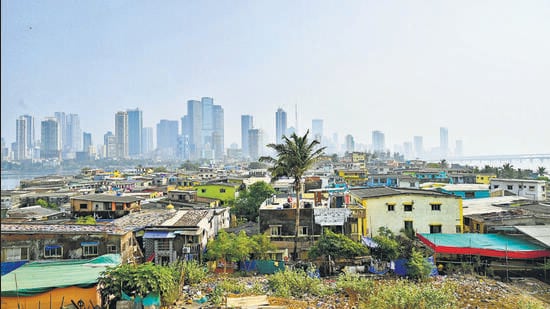
MUMBAI: A decades-old land rights dispute at Worli Koliwada reached a key milestone on Monday when, following a Bombay high court order, internal demarcation of the village land by the collector’s office commenced. The exercise covers the entire property bearing survey number 224 of Worli village, and marks a significant step in a legal battle that began in 1973.
The demarcation, which began on February 2, is required to be completed by February 25 as directed by the court. Residents said that the process followed decades of litigation by original inhabitants and landholders seeking formal recognition of their land rights.
Community representatives told HT that the survey was expected to benefit 457 landholders at Worli Koliwada and was a precedent for koliwadas and gaothans across the Mumbai Metropolitan Region and other coastal districts of Maharashtra. The development comes against the backdrop of a recent government resolution initiating similar surveys across gaothans and Adivasi padas.
Fishermen said the survey was critical to safeguarding their land from being classified as slum land and brought under the BMC or the Slum Rehabilitation Authority. Residents maintained that Worli koliwada was a gaothan and lay outside the BMC’s jurisdiction. They alleged that in the early 1970s, the civic body began encroaching on village land, prompting four residents to move the Bombay high court in 1973 seeking protection and a declaration that the area was encroachment-free.
“If this had been declared BMC land, it would have been entirely at their mercy and the structures on it could have been demolished at any time,” said Devendra Katkar, a resident, alleging repeated attempts by the civic body to claim the land and interfere in community matters.
The community said the land was integral to its livelihood. Fishermen use open spaces to dry fish after the catch, and many families depend entirely on fishing for income. The area houses hundreds of fishing boats, underlining the scale of dependence on traditional fishing activity.
While several houses in the gaothan are already registered, residents said ownership records had not been updated for decades. They said the ongoing survey would formally record residents’ names and lead to the issuance of updated property cards recognising ancestral ownership and would also enable community-led redevelopment.
“The demarcation of Worli Koliwada is more than a technical land survey,” said local activist Sanfur Netto. “It is the restoration of historical identity, livelihood security, and legal dignity for traditional coastal communities. Recognising gaothan land ensures that development does not erase heritage but instead protects those who have sustained Mumbai’s maritime culture for generations.”
The outer boundary survey of Worli Koliwada was completed in 2018. The current phase focuses on detailed measurements of individual houses. Residents cited a 1933 Bombay Improvement Trust Committee resolution that reserved the land for Koli, East Indian and Bhandari communities residing in the gaothan for traditional occupations, including fishing, toddy tapping and cattle rearing.
Officials from the collector’s office are using GPS equipment to map the entire boundary and are expected to begin marking internal parcels in the coming week.
“We are really happy. This has come after a long struggle of 53 years,” said Pralhad Worlikar, a community leader. “Gaothans are not slums,” said Vijay Worlikar, son of one of the original petitioners. “This survey will finally give us legal rights over land that has always been ours but was never formally updated.”
Advocate Godfrey Pimenta of the Watchdog Foundation said the commencement of internal demarcation at Worli Koliwada was a landmark moment in Maharashtra’s land governance history. “By implementing the Bombay high court’s directions, the state is finally addressing a long-standing gap between customary occupation and formal land records in gaothans,” he said. “This exercise does more than settle a local dispute, it reinforces the legal distinction between gaothans and slum lands, protecting traditional communities from arbitrary reclassification and displacement.”
Updated property cards, Pimenta said, would not only recognise ancestral ownership but also empower communities to pursue self-driven redevelopment while safeguarding traditional livelihoods such as fishing. “Importantly, this process sets a strong precedent for similar surveys across gaothans and adivasi padas, aligning heritage conservation, livelihood security, and urban planning within the rule of law,” he said.
An official from the Collector’s office said the action was taken in view of a High Court order, adding that compliance details must be submitted to the court before the February 25.
VOICES
“People don’t understand what we mean when we ask for protection as a gaothan. Fishing has been our occupation for centuries. If we are displaced from here, where else can we do this? Some say Kolis no longer fish, but you only have to walk a hundred metres to see nearly a thousand boats. This land is essential for us to continue our livelihood.”
—Kunal Devanand Worlikar, 40, fisherman
“In 1994, the Bombay high court delivered a judgment in our favour after four residents from the village petitioned the court in 1973. The BMC challenged the judgment, but a division bench of the high court upheld the single judge’s order. The court had left it open to either party to file an application for the appointment of a commissioner to measure and demarcate the available and existing waras land. However, no follow-up happened then. We finally filed a petition again in 2025, which led to the appointment of surveying authorities from the district collector’s office and the commencement of the survey.”
—Vilas Worlikar, 76, community historian