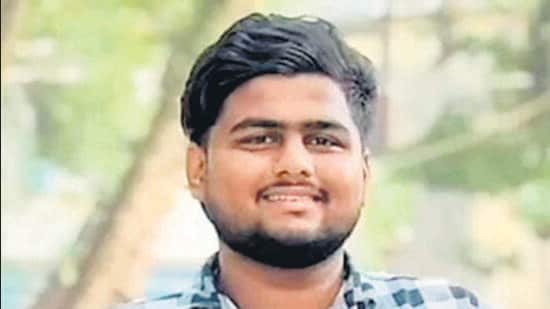
THANE: The deaths of 18-year-old Soham Kathare, an HSC student, after he fell from a crowded local train between Mumbra and Kalwa, where he was headed to an exam centre on Tuesday, and 28-year-old Chetna Devarukhkar at Badlapur railway station on January 31, after she fell in the gap between the platform and a train, have once again called attention to the impact of overcrowding at stations, delayed and insufficient services on commuters.
According to data shared by Central Railway (CR), total services on its main line (CSMT–Kasara/Karjat) have been increased from 836 in 2020 to 894 in 2026. This however is not adequate given the rise in population between Thane and Badlapur. According to data shared by Maruti Gaikwad, CEO of Badlapur Kulgaon Municipal Council, the population of Badlapur alone has increased from 1.74 lakh in 2011 to over 4 lakh in 2025.
Information obtained last week by railway safety activist Samir Zaveri through the Right to Information Act, beyond the Thane belt, 758 deaths were registered in 2025. Of these, 222 deaths were due to falls from running trains and 348 due to line crossing.
Kajal Wilben, a Badlapur resident who has been commuting to Andheri for work since 2013, said people move to the distant suburbs in search of spacious homes and better quality of life, “but soon realise that it comes at a price”. “As the local train is the only mode of transport from Badlapur, braving heavy crowds and travelling the distance can be physically and emotionally exhausting,” she said, adding that a delay of 20-40 minutes of trains is common.
“Imagine the passenger pressure when trains are late by 20–40 minutes. You can hear passengers saying they may lose their jobs if such delays continue daily. How long will employers accept the excuse of trains running late,” said Wilben.
Another challenge at Badlapur is that the station has been undergoing renovation for nearly three years – reduced platform space adds to the congestion. As commuters have to often wait for long spans for their train, a stampede-like scenario is often created. And, even after boarding there is no guarantee of a seat in trains that even originate from Badlapur.
Ashish Tiwari, a consultant and resident of Mahan Palms in Badlapur, pointed out that train services have not been able to keep up with the growth in the town’s population. “Passengers neither have the option nor the patience to wait for the next train, which often takes over an hour – and even then there is no guarantee that they will be able to board. So most risk their lives trying to get into an overcrowded train,” said Tiwari.
Affordable housing has drawn people from Mumbai and Thane to Badlapur, where flats are available between ₹15 lakh and ₹32 lakh. Over the past decade, Badlapur has transformed from a green, open locality into a concrete jungle of high-rises. But there is no easy way to travel by public transport to Kalyan or Thane from Badlapur, leaving residents dependent solely on local trains.
Azina Dalvi, a physiotherapist and resident of Ghodbunder Road, in Thane, who used to travel for work to a Badlapur hospital for three years, said, “Even if I reached Badlapur station at around 9:30 pm after finishing work, on most days I returned home only after midnight.” Finding the three- to five-hour commute tiresome, she quit her job and now works in a Thane hospital.
Crowd management is an equally harrowing experience for Railway Protection Force (RPF) personnel, as each platform has one officer on duty at a time. “Trains are routinely delayed between 20 to 40 minutes every day. A single RPF personnel has to execute multiple responsibilities – keeping a watch for thefts, preventing chain pulling, monitoring dangerously leaning passengers, helping close AC train doors, and handling injuries or deaths on the tracks between Badlapur and Ambernath. Ongoing work on FOBs and other infrastructure has reduced the available platform area, further inconveniencing passengers,” said an RPF personnel, anonymously.
He added that under pressure from commuters, the gap on platform number 3 where Devarukhkar fell while boarding the train on January 31, is now being corrected.
Adding to the congestion and delay in locals are also around 20-25 long distance trains that halt on the Thane-Kalyan stretch. A CR official said “efforts are being made to improve the punctuality of the trains to control overcrowding on platforms, by detaining long distance trains during peak morning hours”.