MUMBAI: The Bombay High Court on Monday reiterated that providing sanitation facilities in Mumbai’s slums is the statutory responsibility of the Brihanmumbai Municipal Corporation (BMC), pulling up the civic body for seeking a modification of its earlier order.
“We have made it very clear. It is the responsibility of the corporation to provide (toilets) all over Mumbai. You are as it is providing water and electricity,” justice G S Kulkarni observed during the hearing.
Last week, a division bench of justices Kulkarni and Aarti Sathe had held that slum dwellers cannot be denied basic sanitation facilities and directed the BMC to provide and maintain toilets in all slum areas across the city.
On Monday, the civic body sought a modification of the February 6 order, contending that the number of toilet seats in the Govandi slum in question was 91 and not 60, as recorded in the court’s order. BMC’s counsel, Pushpa Yadav, urged the court to take note of the figure mentioned in its earlier affidavit.
However, the bench declined to entertain oral submissions on the modification plea and asked the corporation to file a proper interim application. Justice Kulkarni also made a pointed remark, saying sarcastically, “Please find more vacant plots of land so that you (BMC) can create more slums.”
In its earlier order, the court had observed that the municipal commissioner and subordinate officers cannot neglect or breach the basic rights of citizens living in unhygienic conditions, particularly in slums that have come up on municipal and government land.
“The municipal commissioner and officers below him cannot neglect and/or breach such basic rights of citizens, who are living in unhygienic conditions, that too in the slums that proliferated on municipal and government lands,” the bench had said.
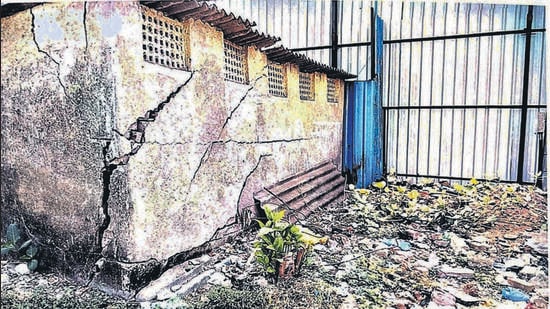
The order was passed on a petition filed by Chetan Samajik Pratishthan (CSP), a Chembur-based NGO, through advocates Ashish Gatagat and Shafi Ahmed Shaikh. The plea highlighted the condition of a dilapidated community toilet in a Govandi slum spread over approximately 1.83 lakh square metres of municipal land. According to the petition, the facility, built using MP funds, had 60 seats and was being used by 4,270 residents.
The bench had also taken serious note of encroachments on civic land, observing that when the corporation allows slums to form on its property, “such land is gone forever from the pool of public lands”.
“It can never be conceived that municipal officers do not safeguard the municipal land, and permit encroachment leading to the formation of a slum,” the court had said.