MUMBAI: There are actors with stage presence, and then there are those whose presence alters the air itself. Some command a room with flamboyance; others enter quietly, settle into a space like breath into a body, and change its temperature without fuss. Vijay Crishna was the latter. His passing marks the end of a presence never noisy, yet always deeply felt — on stage, on screen, and in the lives of those who worked alongside him.
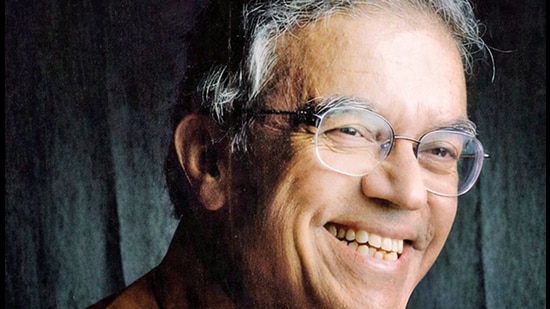
My first clear recollection of Crishna dates to 1981, when I was barely three. He was playing Biff Loman in Death of a Salesman, my mother Linda, under my father’s direction. I remember little of the evening except the force of his performance.
Nuance over ornamentation
For decades, Crishna inhabited theatre as sanctuary and workshop. He was not given to ornamentation. He lived Shakespeare with such aplomb that those are the roles I remember most vividly, particularly his Iago in Othello. What I witnessed at 10 left so indelible an impression that when I later saw Sir Ian McKellen or Kenneth Branagh in the same role, I remained convinced he had outshone them.
As news of his demise, after a period of illness, filtered through, I found myself speaking with many from the fraternity who valued him for rigour and generosity. Almost everybody mentioned how audiences, even without knowing his name, recognised the integrity he brought to each part. He possessed that rare discipline of making performance look unperformed. His turn in Dance Like a Man comes to mind, where he reprised the gifted yet thwarted Bharatanatyam dancer Jairaj, a life marked by resentment, compromise and fragile masculinity. He rendered bitterness without caricature, allowing vulnerability to surface.
His journey into acting did not blaze with instant celebrity. It unfolded patiently — rehearsal halls, touring productions, late-night readings, green-room camaraderie. He believed in the long apprenticeship of the stage: to project without shouting, to feel without exaggeration, to hold silence as carefully as speech. This grounding later enabled a seamless transition into film and television, where the camera, alert to falsity, found in him a face unafraid of nuance.
I was barely cutting my teeth in theatre when I handled lights and sound for Betrayal (Harold Pinter), directed by Pearl Padamsee. Watching the alchemy of Vijay and Sabira Merchant at close quarters gave one a greater high than an occasion to be in the same room with all the Beatles together.
On screen, Crishna often portrayed men on the cusp of moral reckoning — fathers with frailties, mentors with blind spots, officials wrestling with conscience. In an industry that rewards excess, he practised restraint as truth, bringing human grace even to the vilest characters. I felt pained to see social media posts reducing him to “Shah Rukh’s father in Devdas,” as news of his death spread. He did that small part well, but he could stand out even with a single line in Gandhi, where he played Muhammad Ali Jinnah’s driver. When Jinnah questions why the car is empty, he replies, “He preferred to walk,” cueing Ben Kingsley’s entrance. My mother was casting director and my father (Alyque Padamsee) played Jinnah.
He disciplined without humiliating
Yet to reduce him to craft alone would be to miss the warmth that animated it. Those who trained under him recall a teacher who insisted on discipline without humiliation, who corrected without condescension. Theatre, for him, was engagement. He urged younger performers to read widely, observe closely, remain porous to injustice and joy. “You cannot play life,” he would say, “if you do not look at it.”
In later years, as digital platforms proliferated, he remained curious rather than cynical. He appreciated the intimacy of the web series format, yet maintained that nothing replaced the charged silence of a live audience waiting in the dark.
Any attempt to tidy a life textured by experiment and occasional failure, by roles that soared and others that receded – would be false. Through it all ran fidelity to craft. He did not chase fashion. He worked steadily, conscientiously, leaving behind a body of work that will continue to breathe.
The curtain falls, as it must. Yet in memory, as in theatre, presence lingers.
(The theatreperson spoke to Yogesh Pawar)