MUMBAI: The twin cities of Mira Road and Bhayandar are one step closer to getting a special mini-cluster redevelopment scheme that would give new homes to lakhs of residents living in unauthorised and ageing buildings, and legitimise housing for them.
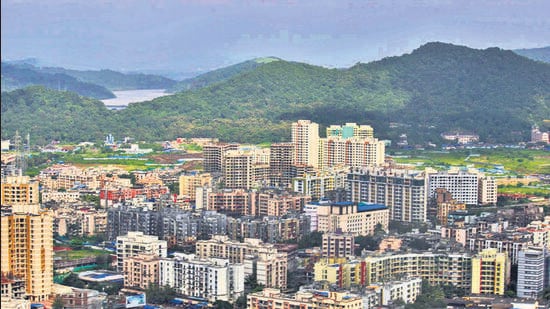
The state urban development department (UDD) is in the process of drafting the scheme, which would reduce the minimum plot size of a ‘mini-cluster’ to 2,500 square metres, from the current 4,000 sq m. However, the mini-cluster scheme can be availed only if a minimum five buildings or more together apply for redevelopment.
To give the draft plan teeth, the Unified Development Control and Promotion Regulations will have to be amended. To this end, the UDD has called for suggestions and objections, a mandatory process before amendments can be made.
Transport minister Pratap Sarnaik (Shiv Sena), whose constituency includes parts of Mira-Bhayandar, has been driving the mini-cluster scheme. “The state government makes laws but they don’t always take into account difficulties on the ground. Hence, a mini-cluster scheme is being introduced despite the existence of a regular scheme,” said Sarnaik, who met with UDD officials in November last year, to expedite the process.
The mini-cluster scheme would transform housing in parts of Mira-Bhayandar, notorious for unauthorised constructions, which boomed in the late ‘70s and early ’80s when the twin towns were still governed by a gram panchayat. Situated just outside Mumbai but with easy access to the suburban railway line, the towns were a budget-friendly solution to a middle-class that could no longer afford Mumbai’s real estate prices.
Development accelerated further when the gram panchayat evolved into a municipal council in 1985 and the Mira-Bhayandar Municipal Corporation in 1990, bringing access to civic amenities. However, circumventing the rules had become the norm, further increasing the number of illegal constructions.
Now old and dilapidated, these buildings, more than 50 years old, are largely unsafe to live in. However, their illegal status has thwarted redevelopment plans. Sarnaik said, “Before the MBMC was formed, no proper guidelines were followed. There are scores of illegal buildings here. Hence we are introducing the ‘cluster within a cluster’ scheme.’’
According to an official with the UDD, the mini-cluster proposal has reduced the minimum plot size to 2,500 sq m, with a minimum of five buildings, provided there’s an access road that’s a minimum 18 m wide. “The project must not clash with the existing Urban Renewal Plan,” the official said. “Incentive FSI of 0.5 will be given. The maximum permissible FSI will be 4.”
Muzaffar Hussain, senior vice-president of the Maharashtra Pradesh Congress Committee and a Mira Road resident, said, “Many buildings were constructed before Mira-Bhayandar got a municipal corporation. Construction mushroomed for fear of losing land to the government under the Urban Land Ceiling Act. Open spaces and amenities were not accounted for. There was no Development Plan in those days. Construction was haphazard and many buildings are more than 50 years old. Hopefully, the mini-cluster scheme will resolve this issue.’’
Manoj Daisaria, former president of the Practising Engineers Architects Town Planners Association said, “A reduction in the minimum plot size requirement for the urban renewal scheme in Mira-Bhayander is a pragmatic, safety driven and socially equitable reform. By focussing on building conditions rather than plot size alone, MBMC can unlock stalled development, safeguard citizens , and promote sustainable urban regeneration.’’