Mumbai: The Mumbai Metropolitan Region Development Authority (MMRDA) has, for the first time, in its budget for the upcoming financial year 2026-27, allocated funds for ‘Integrated Tunnel Roads’ that will be part of an expansive tunnel network spanning the length and breadth of Mumbai.
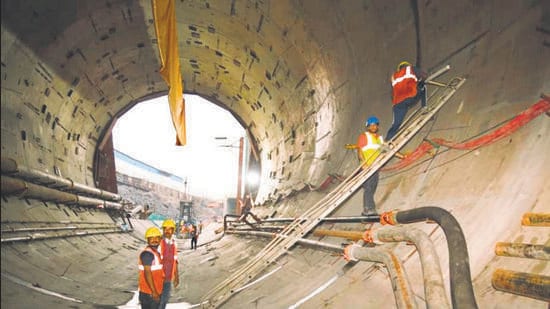
The planning authority has allocated ₹1,189 crore for a new tunnel connecting the Worli-Bandra Sea Link with Terminal 2 of the Chhatrapati Shivaji Maharaj International Airport (CSMIA-T2), which will link up with the proposed Mumbai-Ahmedabad bullet train station at Bandra Kurla Complex. It has also allocated more than ₹4,000 crore for two ongoing tunnel road projects in the city, linking Orange Gate with Marine Drive, and Thane with Borivali.
“The tunnels will complement existing transport projects. They will ease road traffic, reduce travel time, save fuel costs and have a positive impact from an environmental perspective,” said an MMRDA official told Hindustan Times, requesting anonymity.
As reported by HT on November 10, 2025, the MMRDA is working on establishing a ‘third mode of urban mobility’ in the city via creating underground tunnel corridors spanning 70 km at an estimated cost of ₹1.05 lakh crore. The tunnel connecting the Bandra-Worli Sea Link with CSMIA-T2 is part of the first phase of this project.
The proposed and under-construction tunnel roads will help divert a significant amount of traffic underground and reduce surface-level congestion, as has happened in cities like New York City, Paris and London, experts in public policy and urban infrastructure said. Use of tunnel boring machines (TBMs) for construction will reduce air pollution and allow debris to be disposed of systematically, they said.
Public policy expert Paresh Rawal said that for a global city like Mumbai, going underground would certainly benefit vis-a-vis constructing elevated roads.
“Advanced engineering methods available now can ensure that water table levels are not impacted while constructing tunnels. The government must have a dedicated public transport system such as bus lanes in these tunnels, which would tremendously promote mass transit,” Rawal said.
But environmentalists cautioned the tunnel network could have a disastrous impact on the environment.
“The government should first tell the public what has been done with the soil excavated from the Metro-3 project (which runs underground). More soil and earth will be removed if these proposed tunnels are built, while traffic will increase, leading to more pollution,” said Stalin D from the nonprofit Vanashakti. “Rather than building new tunnels, why can’t the government invest in suburban rail and BEST buses and augment them?”