Mumbai: With populist schemes continuing to strain Maharashtra’s finances, no new schemes or projects are likely to be announced in the state budget for 2026-27 which will be presented by chief minister Devendra Fadnavis on March 6, officials familiar with the matter told Hindustan Times.
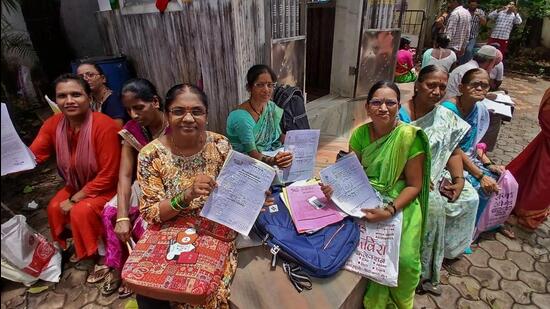
“The state’s finances are in bad shape due to the Ladki Bahin Yojana and other populist schemes alongside a shortfall in revenue,” a senior finance department official told HT, requesting not to be identified. “Though the chief minister has handled the finance department earlier and is well-versed with various issues, it will not be easy for him to prepare and present the budget in the absence of Ajit Pawar.”
Pawar, former Nationalist Congress Party chief and deputy chief minister, was killed in a plane crash in Baramati on January 28, whilst he was busy preparing the state budget. Fadnavis subsequently took charge of the finance department while Suntera Pawar was named deputy chief minister and given charge of three other departments handled by her deceased husband.
Fadnavis, while interacting with reporters on Sunday, said he would not hesitate to take some strict steps in the upcoming budget to retain fiscal discipline.
“We are a developing economy, and managing the finances requires a careful balance between development spending, debt and liabilities. Though there is some stress, we are in a position where there will be no need to cut ongoing schemes,” he said.
Crisis in numbers
Maharashtra entered the financial year (FY) 2025-26 with its debt stock still looking contained on paper. The FY2025-26 budget pegged the outstanding debt at 18.4% of the Gross State Domestic Product (GSDP), broadly flat from the revised estimate for 2024-25, keeping the state outside the high-debt bracket on a standard cross-state comparison. It also budgeted a fiscal deficit of 2.8% of GSDP, at ₹1.36 lakh crore.
The strain on the state’s finances, however, showed up in flow numbers. For FY 2025-26, the Fadnavis-led government budgeted a revenue deficit of 0.9% of GSDP, after it steadily widened from 0.1% in 2022-23 to 0.3% in 2023-24 and a revised 0.6% in 2024-25. This indicated that borrowings were increasingly being used to fund routine expenditure.
The budget also pencilled in only 5% growth in revenue receipts, and assumed that its own-tax-to-GSDP ratio would soften – from 8.1% in 2024-25 (revised estimate) to 7.8% in 2025-26 (budgeted estimate) – leaving little cushion if Goods and Services Tax (GST)-linked inflows or cyclical heads like stamp duty and excise fell short.
Till February 15, 2026, collection from stamp duty and registration was ₹50,000 crore, against the annual target of ₹63,500 crore, while excise duty collection till December 31, 2025 was ₹20,239 crore against the annual target of ₹32,575 crore, data from the finance department showed.
Populist schemes and various sops were placing severe strain on the state’s finances, officials said, and singled out the Ladki Bahin Yojana, which entitles poor women aged 21 and 65 years to a monthly dole, as a major concern. When the scheme was launched in August 2024, the annual payout for 24.5 million beneficiaries was ₹44,000 crore, which was more than 8% of the state’s tax revenue; the payout has now dropped to ₹40,500 crore after beneficiaries were pruned to 22.5 million.
Given these circumstances, borrowing in the ongoing financial year 2025-26 is likely to soar to around ₹99,000 crore, which is the limit sanctioned by the central government, but still high, officials said. The fiscal deficit is likely to rise significantly from the ₹1.36 lakh crore estimated at the beginning of the financial year, while no new taxes can be introduced due to the already high rate of taxation, they noted.
Cut in expenses
Sources in the finance department said it has already initiated cuts in spending up to 30% of the budget outlay; it has also been directed to release the budgeted amount on need-based priority. As a result, overall spending has reached only 49.9% of the budgeted outlay as on Friday (see box for breakup).
“With total revenue generation for the fiscal estimated at ₹5.60 lakh crore, the budget is likely to be cut by over 15%,” the senior finance department official quoted earlier said.
A second official from the department pointed out two major additions in revenue expenditure in the coming years – implementation of farm loan waiver scheme June 2026 onwards, which would cost more than ₹25,000 crore, and implementation of the Eight Pay Commission for over 1.5 million government employees, which would result in an additional burden of ₹20,000 crore annually.
“Though the implementation may actually happen just ahead of the 2029 assembly polls, it will come into effect from January 2026 and the government will have to make adequate allocation for the same,” the official said.
‘Fiscal indiscipline’
Compared to other states, Maharashtra’s revenue generation against its GDP has decreased significantly, said Rupesh Keer from the nonprofit Samarthan, which studies state budgets.
“The southern states are ahead in ensuring that revenue increases in proportion to the rise in GDP. But in Maharashtra, the state government seems focussed on spending mainly on urban infrastructure such as roads, metros, railways. This imbalance is deeply problematic as over 50% of the population lives in rural areas, and is dependent on agriculture,” Keer said.
He also said that most of the state’s borrowings are spent on paying salaries, pensions and interest on various debts, leaving very little money for asset generation. “This is an indicator of major fiscal indiscipline,” he noted.
Niraj Hatekar, former head of the economics department at the University of Mumbai, said the government must set a precedent in the upcoming budget by doing away with schemes like the Ladki Bahin Yojana and free power for operating agricultural pumps.
“The state is struggling with the revenue and fiscal deficit, which have mounted because of the whopping supplementary demands presented after the budget. Fiscal deficit has crossed 4% of the state GDP,” Hatekar said.
Speaking to HT, minister of state for finance Ashish Jaiswal said the government had brought in fiscal discipline strategically by prioritising schemes and refraining from launching new ones to restrict liabilities.
“We have weeded out bogus beneficiaries from various schemes and brought reforms in some such as the crop insurance scheme. This has helped us limit liabilities. On the other hand, we have increased investment and, with the natural growth of the economy, ensured that we remain competitive,” Jaiswal said.
The deficit would continue, and so would the debt, the minister said. “However, they will remain within the permitted parameters.”